
Storm Water Management in Southern MD
Storm Water Management: Protecting Your Septic System During Southern Maryland's Heavy Rains
If you live in Calvert, Charles, or St. Mary's County, you already know Southern Maryland doesn't do "light rain." Between summer thunderstorms rolling off the Chesapeake Bay and the occasional nor'easter, storm water can overwhelm more than just your gutters — it can flood your drain field, saturate your soil, and send sewage backing up into your home. At Southern Shores Septic, we get calls every storm season from homeowners asking the same question: "Why did my septic system fail right after it rained?" Here's what's happening, and what you can do about it.
How Storm Water Affects Your Septic System
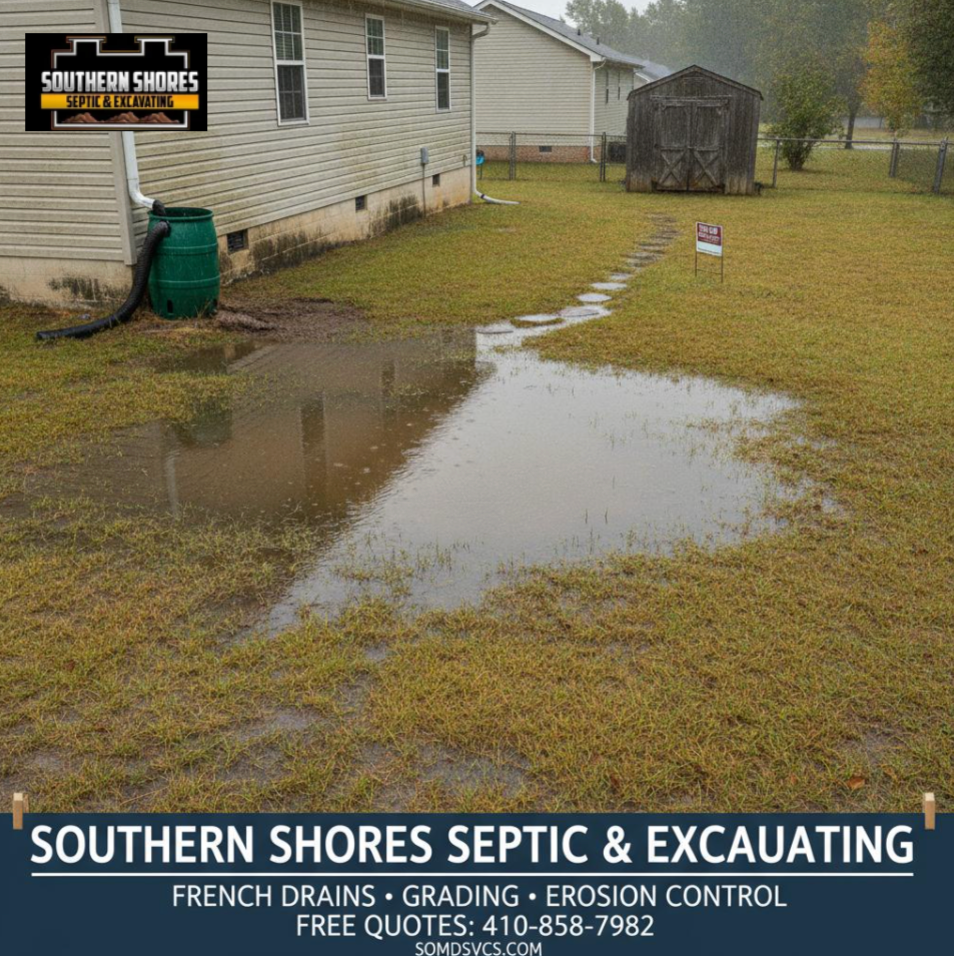
Your septic system relies on your drain field's soil to absorb and filter wastewater. When storm water runoff floods that same area, the soil becomes saturated and simply can't accept any more liquid — from rain or your household. That backup has nowhere to go but up, often straight into your basement, tub, or toilets. Even a system that's working perfectly can be pushed past its limit by poor drainage during a hard rain.
Warning Signs Storm Water Is Impacting Your System
- Standing water or soggy patches over your drain field after rain
- Slow drains or gurgling pipes during or after a storm
- Sewage odor near the tank or drain field
- Grass that's noticeably greener or lusher over the drain field lines
- Backups that seem to happen only during or right after heavy weather
Storm Water Management Strategies That Protect Your System
1. Grade Your Yard Away From the Drain Field. Water follows gravity. If your yard slopes toward your septic system, every storm sends runoff straight to it. Regrading, even subtly, can redirect water toward a swale, ditch, or rain garden instead.
2. Route Downspouts and Sump Pumps Away From the System. This is one of the most common mistakes we see. Gutters and sump pump discharge lines that empty near the drain field add hundreds of extra gallons of water exactly where your system can least afford it.
3. Keep Heavy Vehicles and Equipment Off the Drain Field. Compacted soil can't absorb water the way loose, aerated soil can. Parking a truck or running mowers repeatedly over the same path compresses the ground and worsens flooding during storms.
4. Install a French Drain or Curtain Drain. If your property regularly collects water uphill of your drain field, a curtain drain can intercept groundwater before it reaches the system, redirecting it around rather than through your absorption area.
5. Space Out Water Use During Storms. When your drain field is already saturated from rain, running the dishwasher, washing machine, and multiple showers back to back only adds fuel to the fire. Spread out water-heavy chores until the ground has had a chance to drain.
6. Schedule Regular Inspections. A system that's already stressed — a nearly full tank, a partially clogged distribution box, aging drain field lines — has far less capacity to handle a storm surge. Routine pumping and inspection catch these issues before a big rain turns them into an emergency.
Why This Matters More in Southern Maryland
Our region's high water table, clay-heavy soils in parts of Calvert and St. Mary's County, and proximity to the Chesapeake Bay and Patuxent River mean storm water doesn't just run off — it lingers. Combined with increasingly intense summer storms, that's a tough combination for older or undersized septic systems. Proper storm water management isn't just about protecting your plumbing; it's about protecting local waterways from the nutrient and bacteria loads that come with septic overflow.
When to Call a Professional
If you're seeing pooling water, slow drains, or odors after every storm, don't wait for a full backup. Southern Shores Septic can assess your drain field grading, tank capacity, and drainage setup, and recommend the right fix — whether that's a simple downspout reroute or a full drain field evaluation. Serving Calvert, Charles, and St. Mary's Counties, we know how our local soil and weather patterns put extra strain on septic systems, and we're here to help you stay ahead of it.
Concerned about how storm water is affecting your septic system? Contact Southern Shores Septic today to schedule an inspection before the next big storm rolls through.
You might also like
Septic & Excavation Articles